

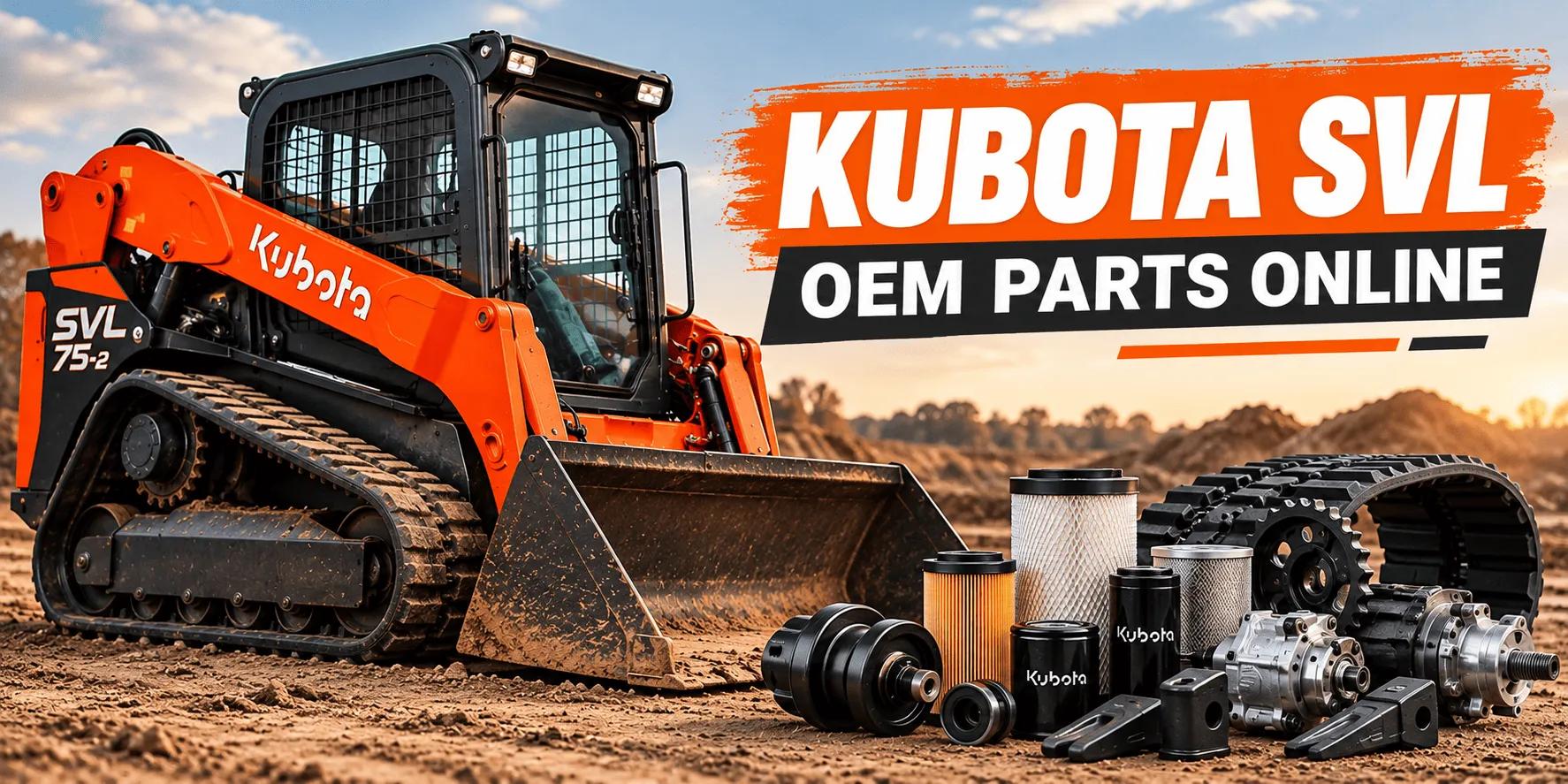
Kubota SVL OEM parts
Kubota SVL compact track loaders are built to handle demanding work across construction sites, landscaping projects, agricultural land and material handling operations. Their tracked undercarriage provides traction, stability and manoeuvrability on uneven ground. However, constant contact with soil, stones, mud and abrasive surfaces gradually wears down undercarriage components.
For contractors, delaying undercarriage repairs can seem like a sensible way to control immediate expenses. A worn track may still move, and a damaged roller may not stop the machine straight away. Yet continued operation can increase component wear, affect machine performance and lead to more expensive repairs. Understanding the hidden cost of delayed SVL undercarriage maintenance helps equipment owners make better decisions about inspections, replacement parts and repair schedules.
Why the SVL Undercarriage Needs Regular Attention
The undercarriage is one of the hardest working areas of a compact track loader. It includes rubber tracks, rollers, sprockets, idlers and related components. Each part plays a role in guiding the tracks, supporting the machine and transferring power to the ground. These components work together. When one part becomes excessively worn, it can affect the others. For example, worn sprocket teeth may engage poorly with the track. Incorrect track tension can also increase stress on moving components and accelerate wear.
Operating conditions influence how quickly these problems develop. Rocky ground can damage rubber tracks, while mud and debris may collect around rollers and idlers. Frequent turning on abrasive surfaces can place additional stress on the tracks. Regular inspection helps identify early signs of wear before they develop into more serious mechanical problems. Contractors who follow the maintenance guidance for their specific Kubota SVL model are better placed to manage repair costs and protect machine availability.
How Delayed Repairs Increase Replacement Costs
One of the main risks of postponing SVL undercarriage repairs is the effect of component wear on neighbouring parts. A damaged component rarely operates in isolation. Consider a rubber track with visible cuts, exposed reinforcement or damaged lugs. Continuing to use it may increase the risk of track separation or failure. If the track loses tension or comes off its intended path, other undercarriage components may also sustain damage.
Worn rollers and idlers create similar concerns. Their condition can affect track alignment and movement. A failing bearing or damaged roller surface may place additional stress on the track assembly. Sprocket wear is another important consideration. As the teeth deteriorate, track engagement may become less effective. Replacing the sprocket at the appropriate time can help prevent unnecessary wear to compatible track components.
The financial consequences depend on the machine, the severity of the damage and the working environment. A relatively small repair identified early may become a more extensive job involving several components if ignored. Contractors should therefore assess the condition of the complete undercarriage rather than replacing individual parts without checking the surrounding assembly.
The Financial Impact of Machine Downtime
Repair costs extend beyond the price of replacement parts. When an SVL loader becomes unavailable, contractors may face delayed work, disrupted schedules and additional labour expenses. On a construction site, a compact track loader may support excavation preparation, material movement, grading or attachment work. If the machine stops unexpectedly, other workers and equipment may have to wait. The delay can affect several stages of the project.
Equipment owners may also need to arrange emergency parts delivery, additional transport or a replacement machine. Hiring substitute equipment can be particularly expensive when a repair takes longer than expected. Planned maintenance offers greater control over these costs. Contractors can schedule inspections around quieter periods and order suitable components before a minor issue becomes an urgent repair. The actual savings will vary by site and machine usage, but avoiding preventable breakdowns can help protect productivity.
Warning Signs Contractors Should Not Ignore
Early symptoms often provide useful clues about undercarriage condition. Visible cracks, cuts, missing rubber sections and unusual track wear warrant closer inspection. Loose track tension, repeated track derailment or difficulty maintaining normal movement should also be investigated. Unusual grinding, knocking or squealing noises may indicate wear or damage involving rollers, bearings or other moving components. Uneven wear across the tracks can point to alignment, tension or operating issues. Operators should report changes in machine behaviour promptly. A loader pulling to one side, vibrating unusually or struggling to travel smoothly may require a professional assessment.
These symptoms do not always identify a single failed component. Dirt build up, incorrect tension, worn parts and other mechanical faults can produce similar signs. A qualified technician should inspect the machine before a replacement decision is made. For safety, undercarriage inspections and adjustments should follow the manufacturer's procedures. The machine must be secured correctly, and suitable precautions should be taken before anyone works near moving tracks or raised equipment.
Choosing the Right Replacement Parts
When repairs are necessary, selecting compatible parts is essential. Contractors should identify the exact SVL model and serial number before ordering replacement tracks, rollers, sprockets or idlers. Specifications can differ across models and production ranges, so visual similarity alone is not enough to establish compatibility. Original equipment manufacturer parts may suit contractors who prioritise original specifications and manufacturer support. Quality aftermarket alternatives may also be appropriate, depending on the component, supplier and application. In either case, buyers should review technical specifications, warranty conditions and expected service life.
Contractors sourcing Kubota SVL OEM parts online should verify part numbers and machine compatibility before placing an order. Clear product information and reliable supplier support can reduce the risk of receiving an unsuitable component. Price comparisons should include more than the initial purchase cost. Delivery charges, installation requirements, warranty coverage and the consequences of premature failure all affect the overall expense. A suitable component with a reasonable service life may offer better value than a cheaper replacement requiring frequent attention.
Building a Preventive Undercarriage Maintenance Routine
Preventive maintenance starts with consistent inspections. Operators should check the tracks, rollers, sprockets and idlers for visible damage, excessive wear and debris accumulation. Cleaning the undercarriage after working in muddy conditions can help prevent material build up from interfering with moving parts. Track tension should be checked according to the manufacturer's instructions. Both excessive and insufficient tension can create problems. Contractors should avoid making adjustments based on guesswork, as incorrect tension may accelerate wear or affect machine operation.
Maintenance records also help reveal patterns. Recording operating hours, inspection findings, repair dates and replaced components gives equipment managers a clearer view of undercarriage performance. Repeated failures may indicate a need to review operating practices, cleaning routines or the suitability of the selected parts. The right inspection frequency depends on site conditions and machine usage. A loader working daily on rough, abrasive terrain may require more frequent checks than one used occasionally on prepared ground.
Making Repairs Before Costs Escalate
Delaying SVL undercarriage repairs can turn manageable wear into a costly maintenance problem. Damaged tracks, worn rollers and deteriorating sprockets can affect neighbouring components, reduce productivity and increase the risk of unexpected downtime.
A structured maintenance plan helps contractors identify faults earlier, compare replacement options carefully and schedule repairs with less disruption. When purchasing components, equipment owners can also consult suppliers such as Vine and Branch Equipment Supply for information about available parts and product compatibility.
Ultimately, the best approach is to assess undercarriage condition regularly and act on credible warning signs. Timely repairs, correct component selection and proper maintenance can help protect equipment performance and control the long term cost of operating a Kubota SVL compact track loader.
Frequently Asked Questions
What happens if I delay Kubota SVL undercarriage repairs?
Delaying repairs can allow wear to spread to neighbouring components. It may also increase the risk of track damage, unexpected breakdowns, higher repair bills and lost working hours.
How do I know when my SVL rubber tracks need replacing?
Look for deep cuts, exposed reinforcement, missing rubber sections, damaged lugs and signs of separation. Excessive wear or repeated track problems also warrant inspection. Follow the maintenance guidance for your model and seek professional advice when necessary.
Can worn sprockets damage Kubota SVL tracks?
Yes. Worn sprocket teeth can interfere with proper track engagement and may accelerate track wear. A technician should assess both components before recommending replacement.
How often should I inspect my Kubota SVL undercarriage?
Inspection frequency depends on operating hours, ground conditions and the manufacturer's maintenance schedule. Machines working in abrasive, muddy or rocky environments may need more frequent checks.
Are OEM undercarriage parts worth the extra cost?
OEM parts can be worthwhile when original specifications and manufacturer support are priorities. However, value depends on the specific component, price, warranty and service life. Suitable aftermarket parts may also meet the machine's requirements.
How can I reduce Kubota SVL undercarriage repair costs?
Inspect the undercarriage regularly, maintain correct track tension, remove accumulated debris, record wear patterns and address faults early. Confirm part compatibility before ordering to reduce avoidable replacements and downtime.